A Land With a Past
1720
SAINT DENIS FOUNDED
Founded under French rule, Saint Denis expands along the lower Lannahechee, becoming its greatest port and the eventual capital of New Roanoke.
1825
New Roanoke COLONY
Nathaniel Mercer receives an empresario contract from Mexico, establishing the colony from which the state of New Roanoke will take its name.
1861
A STATE DIVIDED
New Roanoke secedes from the Union. Blackwater falls to Federal Forces. The war culminates in the Battle of Bolger Glade and the Massacre at Shady Belle.
1878
THE WAPITI REVOLT
The Plains Wapiti revolt against their reservation. Massacred, the survivors are forced to join the Mountain and River Wapiti in the North.
1885...
YOUR STORY BEGINS
Old conflicts still smoulder, and the past still shapes New Roanoke but its next chapter belongs to those who choose to write it...
History of the State

Saint Denis and the plantations of Lemoyne possess a history considerably older than the State of New Roanoke itself. Founded under French rule in 1720, Saint Denis became the principal port of the lower Lannahechee. When France ceded Louisiana to Spain in 1762, the city and surrounding district passed into Spanish hands while retaining much of its established French, African and Creole character.
To strengthen its control over the frontier, Spain transferred governance of the lower Lannahechee from Louisiana to the Spanish province of Texas during the closing years of the eighteenth century. Spain consequently maintained that the district was not included when Louisiana was returned to France in 1800 and therefore lay outside the Louisiana Purchase of 1803, despite competing American claims.
When Mexico gained its independence from Spain in 1821, the lower Lannahechee passed with the rest of Spanish Texas into Mexican sovereignty.
In 1825, the Mexican government granted an empresario contract to an association of American investors led by the land speculator Nathaniel Mercer. The company undertook to settle several hundred families across the land surrounding the western shore of upper Flat Iron Lake and the Great Plains.
Most of the settlers recruited by Mercer came from Virginia and the Carolinas. Mexican documents referred to the undertaking as the Colonia de Nueva Roanoke, while Mercer advertised it in the United States as the New Roanoke Colony, invoking the sixteenth-century English colony established at Roanoke in Virginia. Its promoters presented the venture as a second beginning on the western frontier; a colony that would endure where the first Roanoke had disappeared.
Blackwater developed as the colony’s principal landing place, commercial centre and administrative seat. Its position on Flat Iron Lake made it the natural point through which settlers, livestock, supplies and correspondence entered the territory, closely associating the town with the colonial project.
By the time of the Texas Revolution, the former colonial grant and its surrounding settlements were commonly known as the Roanoke District. Both Roanoke and Lemoyne joined the rebellion against Mexico, although support for the revolution was far from universal. Following Texian independence in 1836, they became separate districts of the Republic of Texas.
When the Republic of Texas pursued annexation by the United States in 1845, representatives from the Roanoke District and Lemoyne sought admission to the Union as a state separate from Texas. Delegates to the statehood convention adopted the name New Roanoke, reviving the name of the colony from which the movement had emerged.
Blackwater was recognised as the birthplace of the statehood movement, while Saint Denis was selected as the permanent capital because of its larger population, established institutions, greater wealth and importance as the region’s principal port.
The State of New Roanoke was formally admitted into the Union on March 3, 1846, providing the twenty-ninth star upon the banner of the United States.
Secession of the State
During the years preceding the American Civil War, political power in New Roanoke remained concentrated among the wealthy plantation owners and commercial families of Lemoyne. The cultivation of cotton, sugar, tobacco and rice depended heavily upon enslaved labour, while the port of Saint Denis connected the state’s plantations to markets throughout the South and abroad.
When the question of secession came before a state convention in 1861, Lemoyne’s delegates overwhelmingly supported withdrawal from the Union. Elsewhere, opinion was more divided, with Blackwater returning a narrower, though still decisive, majority in favour of secession. Support remained strongest among the town’s established landowners, commercial families and those who regarded New Roanoke’s interests as inseparable from those of the other Southern states.
A Unionist minority nevertheless remained within Blackwater and the surrounding Great Plains. Their opposition to secession did not always reflect opposition to slavery. Some resented the longstanding dominance of Lemoyne’s plantation interests over the government of the state, while others feared that war would destroy commerce across Flat Iron Lake and sever Blackwater’s financial connections with the North.
Once New Roanoke entered the Confederacy, open Unionist activity was suppressed. Suspected loyalists were arrested, removed from public office or driven from Blackwater, while those who remained learned to conceal their sympathies. From among this diminished minority, a small covert network began passing detailed intelligence to Union forces elsewhere in the territory, including reports on Confederate patrols, troop movements, military stores, and the strength and disposition of Blackwater’s harbour defences.
This intelligence ultimately enabled Federal forces to take Blackwater early in the war, with Union soldiers hitting Confederate positions where they were weakest. After a brief but confused defence, Confederate forces withdrew from the town and abandoned much of their remaining equipment. Blackwater subsequently became the principal seat of Federal authority in New Roanoke. A Unionist state government was established under military protection, claiming to represent the lawful government displaced by secession. The town also became an important military depot, receiving soldiers, weapons and supplies carried across Flat Iron Lake.
From Blackwater, Federal commanders prepared an offensive intended to carry Union authority into Lemoyne and ultimately capture Saint Denis. In 1864, a large force crossed Flat Iron Lake and advanced eastward through the plantation country of Scarlett Meadows. The campaign displaced untold numbers of civilians, disrupted the autumn harvest, and brought the war into communities that had previously experienced it chiefly through conscription, shortages and the departure of their men.
Confederate forces under General Quincy Harris assembled around Bolger Glade, where the principal roads into Bayou Nwa and Saint Denis could be defended. Earthworks, rifle pits and artillery positions were constructed across the surrounding fields, while a nearby church was requisitioned as a magazine for cartridges, artillery shells and barrels of gunpowder. Farther east, the owners of Shady Belle, one of Lemoyne’s slaveholding plantations, allowed the estate to be used by the Confederate army. Its grounds and buildings were subsequently converted into a headquarters, supply depot and field hospital, taking advantage of the estate’s protected position behind the main defensive line.
The Battle of Bolger Glade began when Harris’ forces were attacked by the advancing Union army, with conflicts erupting across the terrain and surrounding farms. During the battle, the ammunition stored within the church was ignited and the building was largely destroyed by the resulting explosion. Whether the arms store was struck by Union artillery, accidentally set alight by retreating Confederates or deliberately destroyed to prevent its capture remained a matter of dispute long after the war.
Federal forces eventually broke the Confederate position and advanced. As Harris’s army withdrew towards Saint Denis, Union troops marched upon Shady Belle, which remained crowded with wounded Confederate soldiers, surgeons, nurses and civilian attendants. Despite the hospital having been identified as a place of medical treatment, Federal soldiers entered the estate and killed a considerable number of wounded men and the owners of the plantation. Several buildings were looted, and parts of the house were damaged before order was restored.
The killings at Shady Belle became one of the most notorious events of the war in New Roanoke. Federal authorities initially maintained that armed Confederates had fired from the hospital grounds, but surviving medical staff and wounded prisoners disputed this account. No senior officer was ever successfully prosecuted, and the incident was later omitted or minimised in many official Union histories of the campaign. Within Lemoyne, it became known simply as the Shady Belle Massacre and was frequently invoked as evidence of the brutality of the occupation.
Shady Belle survived the war but never recovered its former prosperity. Its use as a hospital, the damage inflicted during the massacre and the destruction of its stores and outbuildings left the estate heavily burdened by debt. The abolition of slavery, the loss of livestock and machinery, and years of neglected fields and drainage further weakened the plantation. Repairs were made to the main house, but left the estate visibly diminished compared with the grander houses of Lemoyne.
Although victorious at Bolger Glade, the Union army had suffered heavy losses and found its supply routes across Flat Iron Lake increasingly difficult to maintain. Disease, poor supply lines, unfavorable terrain, and continued Confederate resistance prevented the force from advancing upon Saint Denis. The offensive was abandoned, and most Federal troops withdrew towards Blackwater, leaving Saint Denis under Confederate control until the end of the war.
Post Civil-War Era
The collapse of the Confederacy in 1865 brought organised resistance in New Roanoke to an end. Confederate forces surrendered or dispersed, while the government in Saint Denis dissolved as its officials fled, resigned or submitted to Federal authority. Union troops entered the city soon afterwards, restoring Federal control over the state’s institutions.
The Unionist government established at Blackwater during the war was recognised as the lawful government of New Roanoke. Under military protection, its officials transferred the seat of government back to Saint Denis, which resumed its position as the state capital. Former Confederate officials were removed from office or required to swear loyalty to the United States, while the state’s laws and institutions were reorganised to recognise emancipation and the civil rights of formerly enslaved people.
Fort Wallace was established during this period as a permanent Federal post charged with suppressing former Confederate armed groups and guerrillas that resisted the new order of things, though their charge would later shift towards the frontier and the enforcement of Federal policy against Indigenous peoples - most notably, the Wapiti.
A new state constitution was eventually adopted under Federal supervision, abolishing slavery, recognising Black male suffrage and reaffirming New Roanoke’s allegiance to the United States. New Roanoke was formally readmitted to congressional representation in 1870.
Now, in 1885, the Civil War remains a living source of division throughout New Roanoke. Across the state, the scars of war refuse to let its people forget a time when they were divided. The silent battlefield of Bolger Glade, the diminished halls of Shady Belle, the abandoned and outlaw-infested ruins of Fort Mercer, and the enduring presence of Fort Wallace all bore witness to the conflict and its aftermath. To this day, families and communities continue to dispute who collaborated, who deserted, and who bore responsibility for the dead at Shady Belle.
Wapiti
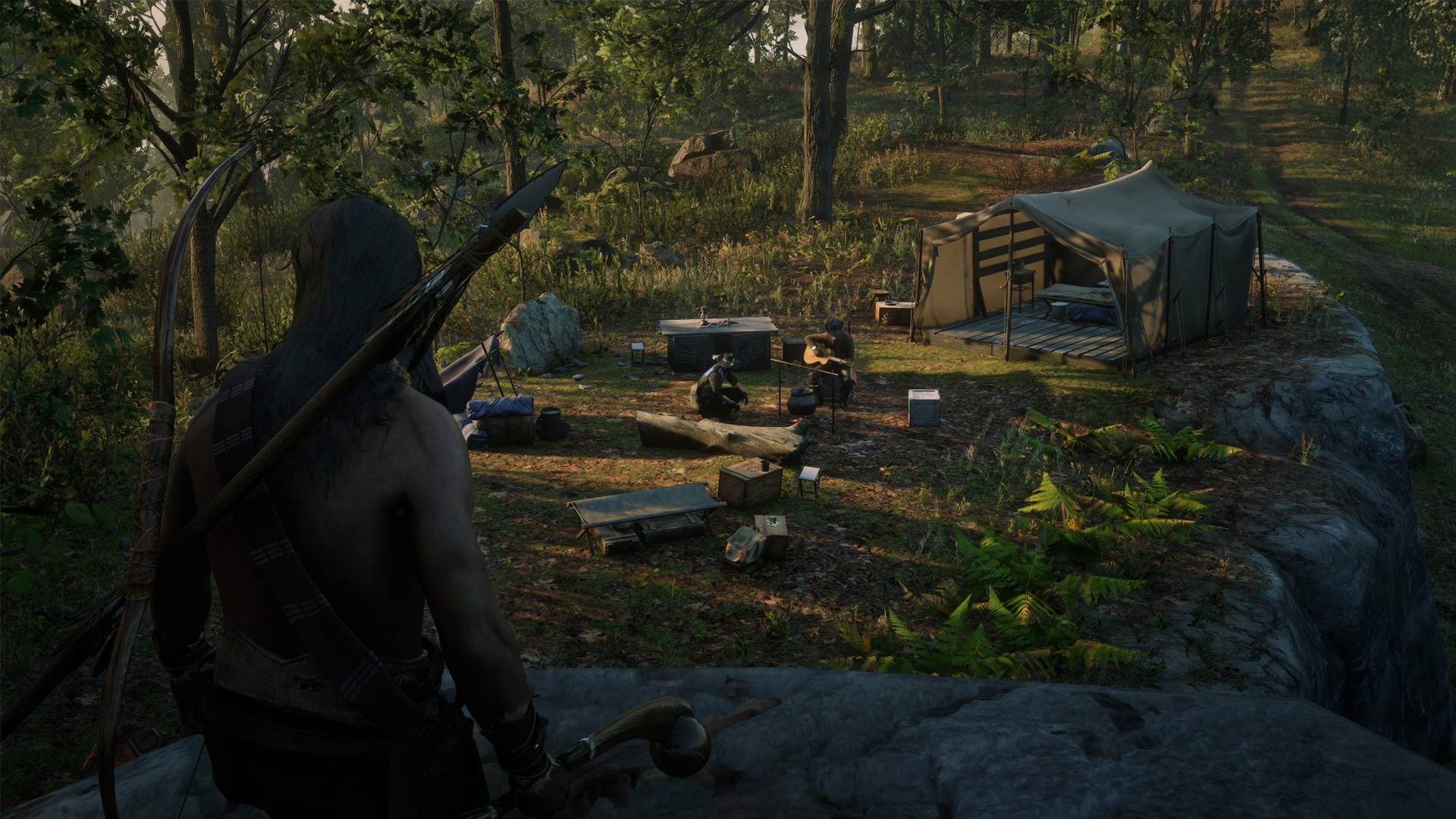
The people known to Americans as the Wapiti are among the oldest inhabitants of the lands now comprising New Roanoke. In their own traditions they refer to themselves by a name commonly translated into English as the Sky People, although Wapiti has become the name most widely used by settlers, government officials, and increasingly by younger members of the nation themselves.
Wapiti History and Key Events
Their historic territory stretched across much of northern and central New Roanoke, from the forests and plains of West Elizabeth and New Hanover to the Kamassa river, Roanoke Ridge, Cumberland, and the mountains of Ambarino.
Over generations, geography produced recognisable differences between Wapiti communities, with regional customs becoming sufficiently distinct that differences in speech, clothing, ceremony, diet, and outlook remain noticeable even in 1885.
Those living upon the western plains would be known to the settlers as the ‘Plains Wapiti’. This was the largest of the Wapiti communities, and their group spanned throughout the plains of West Elizabeth, making their homes amidst vast open spaces so that no threat may sneak upon them. Taught to hunt, ride, and fight from a young age, the Plains Wapiti earned a reputation as capable horsemen and formidable warriors who fiercely defended their communities, traditions, and the sacred buffalo. They were renowned for breeding and training hardy horses capable of travelling great distances across the plains, while their hide-covered lodges could be rapidly erected, dismantled, and transported as they moved between seasonal grazing grounds, gathering places, and sources of water. Across the open country, scouts used smoke, signal fires, elevated lookouts, and mounted messengers to carry warnings and news between distant communities. Central to Plains Wapiti life was the buffalo, upon which generations had depended for food, clothing, shelter, tools, and survival. During the nineteenth century, the destruction of the great herds by commercial hunters - encouraged in part by efforts to undermine and starve Native communities - profoundly changed this relationship. By 1885, the surviving buffalo were regarded by many Plains Wapiti as something to be guarded fiercely from further slaughter.
The Wapiti communities along the Kamassa River and the lands that would later be known as Roanoke Ridge developed traditions centred on fishing, canoe travel, woodland hunting, and seasonal settlement along the river valleys. Settlers would later come to know these communities collectively as the ‘River Wapiti.’ Taught to swim from a young age and renowned for their skill in canoe-building, they became expert navigators of New Roanoke’s rivers, currents, shallows, crossings, and seasonal floods, developing a deep reverence for the waters that sustained them. Their river-cane craftsmanship was considered second to none, producing strong baskets, tools, traps, arrows, and spears; the latter became a favoured weapon of the River Wapiti, used equally for fishing, hunting, and warfare. Their command of the waterways also made them natural travellers and traders, and they were among the earliest Wapiti to act as intermediaries between foreign arrivals and the inland bands.
The northern Wapiti groups adapted themselves to the high country of Cumberland and Ambarino, where smaller populations survived through hunting, trapping, gathering, and movement between sheltered valleys. Settlers would later refer to these communities collectively as the ‘Mountain Wapiti’. Renowned for their trailcraft, the Mountain Wapiti learned to navigate narrow passes, game trails, sheltered valleys, and snowbound routes that outsiders often struggled to cross. Elk and bighorn sheep held particular importance as sources of food, hide, sinew, bone, and horn, with Mountain Wapiti craftsmen becoming especially respected for the powerful bows they fashioned from horn and sinew. Their skill extended to the construction of snowshoes, specialised traps and heavy cold-weather clothing suited to the northern climate. Generations spent among the high valleys also gave their hunters and healers extensive knowledge of mountain plants and their medicinal uses, making such remedies one of the most valued traditions carried by the northern bands.
Despite living separately, shared ancestry, trade, tradition, and language, preserved their kinship. These different bands of Wapiti lived in relative harmony, maintaining longstanding relationships with neighbouring peoples, including the Apache to the southwest and the Choctaw to the east. Through generations of trade, diplomacy, intermarriage, and occasional conflict, customs and beliefs passed between these peoples and became incorporated into Wapiti traditions of their own.
Each year, towards the end of summer, the separate Wapiti bands would come together as one in a celebration that roughly translates as the ‘Gathering of the Sky’. Wapiti communities from across these lands would meet on the shores of Owanjila, a place sacred to all Wapiti. It is here that the Wapiti tell stories, conduct trade, hold ceremonies, and compete in games. Among the most celebrated was ishtaboli, a stickball game introduced through generations of contact with the neighbouring Choctaw and eventually adopted into Wapiti tradition. These gatherings played an important part in preserving ties between bands of Wapiti, reaffirming their shared ancestry, language, traditions, and identity as one people.
Throughout the nineteenth century, government policy increasingly sought to isolate Wapiti communities, restrict their movements, and confine them to designated lands. Of all the regional groups, the Plains Wapiti suffered most severely. Their numbers dwindled as settlers and commercial hunters devastated the buffalo herds upon which they depended, at times with the deliberate intention of weakening and starving Native communities. At the same time, continued encroachment upon their territory provoked increasingly violent resistance from Plains Wapiti unwilling to surrender their land or way of life. The growth of Blackwater further reduced their hunting grounds and freedom of movement, bringing settlers and Wapiti into increasingly frequent conflict.
Following years of escalating hostility, federal authorities established a reservation between Blackwater and Strawberry, encouraged by local settlers and officials seeking to remove the Wapiti from the surrounding plains. Those who refused confinement were driven westward, with most retreating deep into the Tall Trees. Those forced onto the reservation were subjected to an increasingly aggressive programme of assimilation. A school was established where Wapiti children were instructed in Christianity and the English language while their own language, dress, customs, and religious traditions were discouraged or forbidden.
A second reservation was later established in the north to confine the Mountain and River Wapiti, supported by officials and commercial interests in Valentine and Annesburg. As prospectors pushed farther into Ambarino in search of coal, iron, and other mineral deposits, the comparatively small Mountain Wapiti communities came under increasing pressure to abandon their traditional lands. Lacking the numbers to mount sustained resistance, many were eventually compelled to accept removal to the reservation.
The River Wapiti faced similar displacement as Annesburg grew into an important mining settlement and industrial interests expanded throughout Roanoke Ridge and the Kamassa watershed. Communities that had occupied the river valleys for generations were gradually forced from their settlements, while caverns and other places held sacred by the Wapiti were claimed as potential prospecting grounds by mining companies. By the time removal was complete, much of the country that had sustained the River Wapiti had been opened to settlement, logging, and mineral exploitation.
The confinement and displacement of the Wapiti also began to sever the traditions that had historically bound their scattered peoples together. Most significant among these was the yearly Gathering of the Sky at Owanjila, where Wapiti from across New Roanoke had traditionally reunited. As movement became more restricted and increasing amounts of land fell under American settlement, travelling to Owanjila became increasingly difficult. Some Wapiti bands continued to attend in smaller numbers or travelled in defiance of government restrictions, but by the 1870s the gathering was already a diminished shadow of what it had once been.
In 1878, tensions on the western reservation erupted into open revolt. A group of Plains Wapiti, joined by a war party from Tall Trees, attempted to destroy the reservation school and breach its boundaries in order to free those confined there and resist what they saw as the destruction of their culture. The uprising was quickly suppressed by state marshals and federal troops, with many Plains Wapiti killed in the fighting and its immediate aftermath. The reservation itself became the scene of a brutal massacre, with much of the settlement and school reduced to little more than their frames. Those Plains Wapiti who survived were forcibly relocated to the northern reservation, where they were placed alongside the River and Mountain Wapiti. In the aftermath of the revolt, the federal presence in the region was strengthened considerably, with troops from Fort Wallace increasingly tasked with monitoring the reservation, restricting movement, and responding to any further signs of resistance.
The revolt brought the old gathering tradition to an end. With the surviving Plains Wapiti confined alongside the River and Mountain Wapiti in the north, movement beyond the reservation became more heavily restricted and the journey to Owanjila effectively impossible. The Gathering of the Sky has not been held there since 1878. Its loss further strained relations between communities already struggling to adapt to confinement. Some Plains Wapiti, having endured the destruction of the buffalo herds, the western reservation, and the bloodshed of 1878, increasingly resented River Wapiti who had maintained trading relationships with American settlements as a means of survival. Less directly entangled in either grievance, the Mountain Wapiti often found themselves mediating between the two. Such disagreements never erased their shared identity, but they created divisions that might once have been settled when the bands could still gather freely along the shores of Owanjila.
By 1885, conditions on the northern reservation had deteriorated considerably. The forced relocation of surviving Plains Wapiti after the uprising had placed further strain upon land and supplies already shared by the River and Mountain Wapiti, while government rations were frequently insufficient to support the growing population. Hunting beyond the reservation remained heavily restricted, traditional food sources had been diminished or placed beyond their reach, and poor harvests could quickly turn hardship into hunger. Overcrowding, disease, and dependence upon government provisions became persistent features of reservation life, deepening resentment toward the authorities responsible for their confinement.
Wapiti Culture and Customs
Although centuries of distance produced regional differences between Wapiti bands, they remained bound by a common language, ancestry, spiritual worldview, and many shared customs. Differences could be considerable: a family from the banks of the Kamassa might prepare food, dress, travel, or mourn their dead differently from one whose ancestors lived beneath the mountains of Ambarino. Nevertheless, these differences were understood as variations within a common Wapiti culture rather than evidence of separate peoples.
The Gathering of the Sky
For generations, the Gathering of the Sky stood among the most important traditions shared by the Wapiti people. Towards the end of summer, communities from across New Roanoke travelled to the shores of Owanjila, setting aside the distances and regional customs that otherwise separated them. Plains, River, and Mountain Wapiti camped together for several days, renewing family ties, exchanging news and goods, arranging courtships, and hearing stories carried from distant parts of the country. Elders recounted the histories of their people, while younger generations were reminded that, however differently their communities might live, they remained descendants of the same people beneath the same sky.
Owanjila was chosen for more than its central location. The lake occupies a sacred place within Wapiti tradition as a landscape in which the different worlds inhabited by their people appear to meet: water beneath them, earth around them, and open sky above, with the mountains rising nearby and the plains stretching beyond. For generations, Wapiti tradition held that no other place could properly host the Gathering. Smaller celebrations might be held elsewhere, particularly since their confinement to the northern reservation, but many Wapiti regard these only as remembrances of the tradition rather than the Gathering itself. To them, a Gathering held anywhere but Owanjila is missing the very thing that makes it sacred.
The days of the Gathering were filled with trade, contests, feasting, storytelling, and council. Leaders and elders met to discuss matters affecting the wider Wapiti people, while disputes between families or bands could be brought before those assembled for judgement. Not every disagreement was settled through words alone. Ishtaboli, otherwise known as stickball to the settlers, became one of the Gathering's most celebrated traditions, with matches sometimes serving as a means through which rival communities could compete, settle grievances, and preserve honour without allowing old disputes to become blood feuds. Horsemanship, hunting skill, wrestling, races, and other contests likewise encouraged rivalry between the bands while reaffirming that such competition took place between members of the same people.
When darkness fell, the character of the Gathering became more ceremonial. Fires were lit along the lakeshore and the people gathered for songs, dances, prayers, and the retelling of traditions passed from one generation to the next. These ceremonies were understood as a renewal not merely of individual communities, but of the Wapiti as a whole. For the duration of the Gathering, violence between Wapiti was forbidden upon the shores of Owanjila. Even bitter enemies were expected to leave their weapons and grievances aside or submit them to council and competition. This protection, however, was understood as belonging to the Wapiti people and the sacred gathering itself, not as an unconditional promise of peace toward outsiders who entered the gathering grounds.
The last Gathering of the Sky was held at Owanjila in 1878. Since the revolt and the forced relocation of surviving Plains Wapiti to the northern reservation, travelling there has been forbidden or made effectively impossible. Attempts have been made to preserve parts of the tradition within Ambarino, but these smaller gatherings remain controversial. Some Wapiti see them as necessary to prevent their customs from disappearing; others, particularly among those who remain fiercely attached to the traditions of the western plains, argue that accepting a substitute only makes their dispossession easier to endure. Among them survives the belief that the Gathering has not ended at all. It has merely been prevented, and that one day the Wapiti must return to Owanjila and hold it again.
Burial Customs and Funerary Rites
Although funerary traditions differ between the Plains, River, and Mountain Wapiti, all three understand that death is the release of the spirit from a body no longer able to contain it. Although death is mourned, the funeral itself is not regarded solely as a sorrowful occasion, but as a celebration marking the beginning of the spirit’s passage onward. A pyre is prepared for the deceased, whose hair is cut and wrapped around the palm before the body is dressed in colourful cloth and placed upon the fire. As the flames rise and the smoke carries upward, the spirit is believed to leave the body and begin its journey.
The dead are only cremated beneath the light of day. Among the Wapiti, the sun is regarded as a living and sacred power, watching over the world beneath it and possessing a particular association with life, truth, and the passage of the spirit. Fire is likewise sacred, believed to possess an intelligence of its own and to exist in communion with the sun, ferrying the souls of the dead to the life beyond. A body may be prepared or watched through the night, but the flame itself must wait for morning. To burn the dead beneath the darkness of night is regarded as a profound disgrace, denying the spirit the guidance of the sun and risking the spirit becoming lost on its journey to the after life.
Among the Plains Wapiti, the traditional belief holds that the dead may be reborn among the animals of the land and sky. Men are commonly said to return in the form of creatures that walk upon the earth, while women are associated with birds and the open sky. For this reason, encounters with particular animals after a death may sometimes be interpreted as the return or presence of a lost relative.
The Mountain Wapiti conduct much the same cremation rites, but the ashes of the deceased are not ordinarily allowed to remain near the settlement. Those closest to the dead carry them into the high country and release them from a mountain peak or exposed ridge, allowing the wind to scatter them across the sky. The journey itself forms part of the funeral, and relatives may travel considerable distances to reach a place considered suitable. To the Mountain Wapiti, the rising smoke and scattered ashes return the dead to the sky that has watched over their people for generations.
Among the River Wapiti, the ashes instead return to the waters that sustained their communities. Following cremation, the remains are carried to a river, preferably to a high bank, rapid, or waterfall, and released into the current. The flowing water is believed to carry the spirit beyond the places known in life and onward toward whatever awaits it. Rivers associated with the deceased or their family may hold particular significance, making the location of the final rite an important decision for those left behind.
The Importance of Hair
Among the Wapiti, hair is understood as something that grows alongside a person and carries with it the memory of the life the person has lived. It is traditionally allowed to grow throughout life and is only deliberately cut as part of the funerary rites, when it is wrapped around the palm of the deceased before the funeral pyre is lit.
The hair is sometimes spoken of as the price of passage: the final offering carried by the spirit as it leaves the body and begins its journey into the world beyond. To cut one's hair during life is therefore regarded as sacrilege. The more that is taken, the less the spirit is believed to possess when the time comes for it to make that final journey.
A person whose hair has been cut risks their spirit being unable to depart after death. Such spirits are feared to remain among the living as cursed, angry, hungry, and restless beings, bringing misfortune wherever they linger. Failed hunts, poor harvests, sickness, and other calamities are sometimes attributed by wise men and women to spirits that were never able to complete their journey.
Forcibly cutting another person's hair is consequently regarded as an especially cruel act. Beyond humiliation, it may be understood as an attempt to endanger their spirit and deprive them of something they will one day require in death. For those who believe this, few insults carry greater spiritual significance.
Wapiti Gods, Spirits, and Omens
The Wapiti traditionally understand the world as inhabited by powers and spirits. The sun, fire, rivers, storms, animals, mountains, and even the shadows cast by human beings may possess spiritual significance. Although these beliefs are shared throughout the Wapiti people, centuries of separation have produced some variation between communities. The Plains, River, and Mountain Wapiti may therefore tell slightly different versions of the same story, use different names for the same spirit, or place greater importance upon beings associated with the landscape in which they traditionally lived.
Generations of contact with neighbouring peoples likewise influenced Wapiti tradition. This is particularly apparent among the River Wapiti, whose longstanding relationships with the Choctaw introduced names and stories which gradually became incorporated into traditions of their own.
The Great Spirit and The Sun
At the centre of traditional Wapiti belief is a supreme sacred power most commonly known as Ishtahullo-Chito, or the Great Spirit. It is not the only name by which this power is known, and traditions differ considerably in how it is described. Ishtahullo-Chito is rarely imagined in human form, but instead understood as the sacred power underlying the order of the living world: the passing of the seasons, the natural order of things, the continuation of life, and the journey which awaits every spirit after death.
The sun is regarded as the greatest visible manifestation of Ishtahullo-Chito’s power. He is thought to be connected to the sun, with some traditions describing the sun as the eye of Ishtahullo-Chito, watching the world beneath it and bringing the light by which life is sustained and truth revealed.
Wapiti belief in this is so strong that negotiations, important debates, and even battles may be postponed on days when the sun is obscured. To stand beneath its light is to place oneself beneath the gaze of Ishtahullo-Chito, where deceit is exposed and truth is brought into the open.
The Two Shadows
Traditional Wapiti teachings commonly describe a person as possessing two spiritual shadows. These are often known by names inherited through contact with the Choctaw: the shilup, or inner shadow, and the shilombish, or outer shadow. The shilup is generally understood as the innermost spirit of the individual - the part which must eventually leave the mortal world - while the shilombish is the spiritual impression that a person leaves behind them.
At death, the shilup begins its passage onward. The funeral fire, the light of the sun, and the rites performed by the living are intended to ensure that this journey begins properly. A spirit denied the proper rites, deprived of what it requires for the journey, or otherwise prevented from leaving may remain dangerously bound to the world it should have departed.
The shilombish, meanwhile, may linger for a time around the places and people familiar to it in life. Ordinarily it is expected gradually to fade once the dead have been properly mourned and their affairs among the living have reached their end. Those who die violently, leave some great grievance unresolved, or whose funerary rites are profaned are sometimes believed to leave much stronger shadows behind. Such beings may wander around their former homes, appear at the place of their death, or attempt to drive the living away through cries and disturbances during the night.
A wandering shilombish is traditionally said to imitate animals, particularly the fox and owl. These calls are felt to be those of a shilombish, when no other animal responds to their calls. For this reason a lone bark or owl-call repeatedly heard near the home of somebody recently deceased may be treated with considerable unease, for the spirit is restless. Its cries are regarded as an omen of misfortune and calamity.
Nalusa Chito, the Soul-Eater
Among the most feared beings in Wapiti tradition is Nalusa Chito, the Great Black Being, sometimes called Impa Shilup, the Eater of Spirits. Stories speak instead of an immense darkness, a shape seen where no shadow ought to exist, or something which follows beyond the edge of a fire's light without ever allowing itself to be properly seen.
Nalusa Chito is believed to prey upon the spirit rather than the body. Traditional stories warn that those who surrender themselves completely to cruelty, hatred, despair, or destructive thoughts may become vulnerable to its influence. It does not necessarily seize a person all at once. Instead it is said to creep gradually into the spaces within them, consuming the spirit until very little of the person they once were remains.
Many Wapiti therefore avoid speaking the name Nalusa Chito unnecessarily, particularly after darkness has fallen. Some believe that repeatedly naming a spirit draws its attention, while others regard this merely as an old warning intended to discourage people from dwelling upon dangerous things. Whatever the explanation, even Wapiti who dismiss many older superstitions may hesitate before calling upon the Soul-Eater by name.
Nalusa Falaya, the Long Black Being
Nalusa Falaya, the Long Black Being, appears most often in traditions associated with the River Wapiti and the wooded country surrounding the Kamassa. It is described as vaguely human in shape but unnaturally elongated, with a shrivelled face, small eyes, pointed ears, and an exceptionally long nose. Some stories claim that it walks upright at a distance but drops to its stomach when approaching a person, moving through the undergrowth with a motion compared to that of a snake.
Nalusa Falaya is particularly associated with hunters travelling alone. It seldom attacks directly. Instead it follows, startles, confuses, or frightens those who enter places where it is believed to dwell. Some traditions claim that those who encounter it may carry a portion of its harmful influence home with them, bringing nightmares, sickness, quarrels, or misfortune until the influence is recognised and driven away.
Stories also speak of the children of Nalusa Falaya, strange beings capable of casting aside the heavier parts of themselves during the night and travelling as small bodies of light. These wandering lights are said to appear above marshes, riverbanks, and flooded ground, moving where no person could safely walk. Among the River Wapiti, unexplained lights seen across wetlands after dark are therefore treated with suspicion and are rarely followed.
Closely related is the spirit known as Hashok Okwa Hulga, or the Grass Water Drop. Only its glowing heart is said to be visible, appearing as a distant light dancing above wet ground. Those who stare too long or attempt to approach it find the light forever retreating before them, drawing them farther from familiar paths until they become hopelessly lost. Children are traditionally warned never to follow a light across the marsh, no matter how close or welcoming it appears.
Kashehotapolo, the Woman-Caller
Another creature found particularly within River Wapiti stories is the Kashehotapolo, the Woman-Caller. Neither entirely human nor animal, it is usually described as having the body and arms of a man but the legs and hooves of a deer. Its head is small and shrivelled, and merely seeing its face is sometimes regarded as an omen of approaching misfortune.
The Kashehotapolo is not ordinarily believed to kill those it encounters. Instead it delights in frightening travellers. Hunters approaching swamps, dense woodland, or isolated riverbanks tell of hearing footsteps following behind them before an extraordinarily loud cry erupts at close distance. The sound is said to resemble the scream of a woman in distress, after which the creature immediately flees. Stories of the Woman-Caller are consequently sometimes used to warn inexperienced hunters against rushing blindly toward voices heard in unfamiliar country after dark.
Heloha and Melatha - Thunder and Lightning
Storms possess considerable spiritual significance throughout Wapiti tradition. Heloha, the spirit of thunder, and Melatha, the spirit of lightning, are commonly depicted as a pair of enormous birds travelling within the storm clouds. Heloha is traditionally described as the female of the pair. She lays immense eggs among the clouds, whose rolling and colliding produces the rumble of thunder heard across the earth below.
Her mate Melatha is said to be among the fastest beings beneath the sky. As he races between the clouds he leaves brilliant trails of sparks behind him, producing the flashes of lightning that accompany Heloha's thunder. A violent thunderstorm may therefore be spoken of as the two birds passing overhead, and among some families the first great storm of a season is greeted with offerings, songs, or prayers asking that their passage bring rain without destruction.
Animals and Omens
Animals occupy an important place within Wapiti spirituality and are often understood as messengers, teachers, ancestors, or signs through which the world reveals what is approaching. This does not mean that every unusual animal is automatically treated as supernatural. Hunters in particular pride themselves upon understanding ordinary animal behaviour. An omen is significant precisely because something behaves in a manner that it should not.
Few creatures are surrounded by as many warnings as the owl. The Ishkitini, or great horned owl, occupies a particularly feared place within Wapiti tradition. Unlike the shilombish, which may imitate the cry of an owl while wandering near the living, Ishkitini is believed to prowl the night in its own form and to kill both men and animals. Its screech is therefore associated with sudden and violent death, particularly murder, and may be interpreted as a sign that Ishkitini has taken a life or is hunting for one.
Other owls carry more specific warnings. The cry of the Ofunlo, or screech owl, has traditionally been associated with danger to a young child, while the repeated hooting of the common owl, sometimes called Opa, close to a family's home may be understood as warning of the death of a relative. These signs are not regarded as certainties by every Wapiti, and interpretations differ greatly, but they remain sufficiently well known that an owl behaving strangely around a settlement rarely passes entirely without comment.
Not all omens announce death. The Biskinik, a small sapsucker sometimes known simply as the news bird, is believed to herald the arrival of unexpected information. If one settles prominently near a family's dwelling early in the morning, tradition holds that important news will arrive before midday. If it appears late at night, the news is expected before the following morning. Whether the message will be welcome is another matter entirely. Biskinik promises only that news is coming.